
Temperature and technique win out over seasonings in this simple but delicious recipe for Atlantic salmon and asparagus. The bright zing of fresh vegetables is the perfect complement to buttery, rich fish.

Ingredients – Serves 2
- 2 prepared Atlantic salmon filets, about 5oz each, skinned and rinsed *Atlantic salmon is much richer and fattier than sockeye salmon, so it has great flavor without needing much in the way of added seasonings.
- 8 oz fresh asparagus, trimmed
- Cooking oil spray
- Sea salt to taste
- Lemon wedges (optional)
Gear
- Jetboil Genesis Basecamp with propane hook-up
- 2 saute pans and/or frying pans
- Silicone lid
- Tongs
- Turner
- Plates and silverware for serving
Steps
Reference “Cooking Notes and Helpful Links” below on how to safely prepare the salmon so you’re keeping bears (and salmonella) at bay.
- Season the salmon with sea salt to taste and set aside. You can do this right in the washable container you packed them in from home.
- Trim the tough ends from the asparagus and set aside.
- Turn one burner up to medium heat and warm the pan for the salmon over the flame for just a couple of minutes. Then add about a tablespoon of cooking oil to the pan and let it warm – you’re looking for the oil to reach the same temperature as the metal of the pan. This is the best way to prevent sticking.
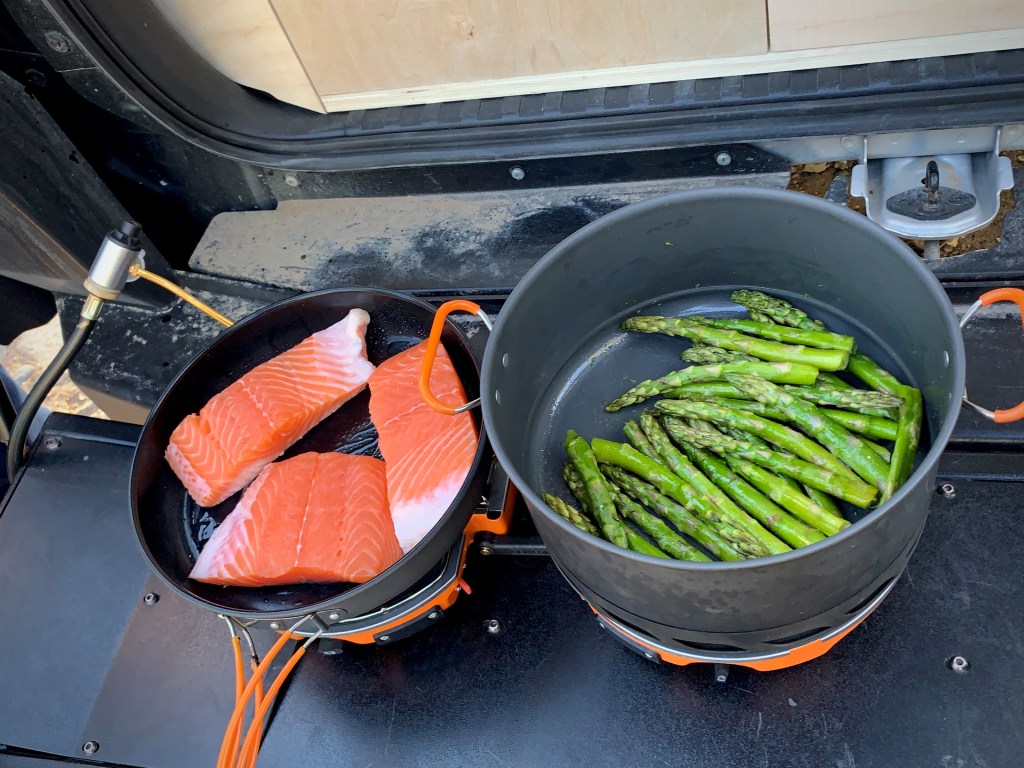
- Add the salmon filets to the pan, face up, and allow to cook undisturbed for approximately 5 minutes on medium heat.
- With a second burner, turn the heat to medium, let the pan warm for a few minutes, then add 3-4 tablespoons of oil and let that warm.
- Add the asparagus to the second pan, and add salt to taste. Toss the asparagus well with tongs to evenly coat in the oil. Cover.
- Keep tossing the asparagus in the pan every few minutes, especially as it gets closer to being done. Adjust the temperature and add more oil as needed. You want the asparagus to be bright green and cooked through. A bit of char is delicious but don’t let the blackened spots get out of hand.
- The salmon should remain undisturbed during this time, but again, keep an eye on it.
- For the last 1-2 minutes, turn each filet over and raise the heat to medium-high.
- The total cooking time for the salmon should be about 15 minutes for medium to medium-well. You’re ideal internal temperature should be about 130 degrees Fahrenheit if you feel like checking that with a thermometer. I tend to just use my Spidey Sense.
- Turn the heat off on the salmon at let the fillets rest for 3-5 minutes.
- Divide the asparagus spears and salmon between two plates. Serve with lemon wedges if desired.
Cooking Notes and Helpful Links
- As always, remember that every camp stove is different, and can be less predictable than your stovetop at home. Keep a close eye on both pans as they cook, especially if you’re unfamiliar with your setup.
- Preparing the salmon: I usually prepare the salmon before we leave home, because I don’t want any salmon smells around camp after dinner is over. Any packaging the salmon originally came in, as well as the salmon skin does not come on the road with us. Even if you have a really good bear-proof trash receptacle, it’s good practice to be smart about what kinds of smells you’re keeping around your camp. Before you leave home, unwrap the salmon and rinse it well under cold water. Pat dry with paper towels, and put filets in a washable container. Keep refrigerated until ready to cook, and make sure you have a good way to wash your hands at camp while handling raw fish. Do not pre-salt the salmon unless you’ll be cooking it within an hour or so. Salt begins to cook the salmon if it sits on the flesh for too long. I really like using Mowi brand Skinless Atlantic Salmon 2pk. Otherwise you can ask your fish monger to remove the skin for you, or do it yourself with a good boning knife and lots of confidence.

- To trim the asparagus spears of their tough ends, the best technique is to hold one spear gently and begin to bend the spear near the bottom half. Wherever the spear naturally snaps, this is where that spear should be trimmed. Discard the lower portion that breaks away.
- Cooking oil spray: I’ve experimented with a few different brands and types of cooking spray. I prefer not to use generic “cooking spray”, but rather something that is a natural, healthy oil that also happens to be in a spray bottle. For cooking on top of a mountain with limited resources, a spray bottle is the best way to keep everything contained and easy. I’ve dealt with clogged nozzles, oils getting rancid quickly, and best of all, cold air causing the oil to solidify. That being said, my all-time favorite go-to is Good & Gather Avocado Oil Cooking Spray. Avocado oil has a high smoke-point meaning you can use it at high temperatures, unlike olive oil. It’s a very neutral oil, so it doesn’t lend flavors to the food. Good & Gather’s oil is expeller pressed with no additives and no propellants. And the nozzle actually works and keeps spraying even in cold weather.

 A Guy A Girl and A Trail